











The formal ratification of the U.S.-EU Critical Minerals Alliance, in Brussels marks far more than a diplomatic handshake—it represents the most significant realignment of industrial policy between the world’s two largest advanced economies since the post-war Marshall Plan. Designed to break China’s stranglehold on the raw materials underpinning the clean energy transition, this binding pact establishes a joint strategic reserve, harmonized environmental and labor standards, and preferential trade terms for lithium, cobalt, nickel, graphite, and rare earth elements sourced from allied nations. For global automakers, battery manufacturers, defense contractors, and renewable energy developers, the U.S.-EU Critical Minerals Alliance is not merely a supply chain safeguard; it is a foundational shift in how sovereignty, sustainability, and security converge in the 21st-century industrial order.
China currently dominates the critical minerals value chain, controlling over 60% of global lithium refining capacity, 80% of rare earth element processing, and nearly all high-purity graphite production. This concentration poses acute risks: during the 2023 export restrictions on gallium and germanium, European wind turbine manufacturers faced weeks-long delays, while U.S. defense contractors scrambled to secure alternatives for radar and satellite components. The new alliance directly confronts this vulnerability by creating a “trusted corridor” for mineral flows that bypasses geopolitical choke points. Under its terms, both the U.S. and EU agree to recognize each other’s mineral certification schemes as equivalent, eliminating redundant audits and accelerating time-to-market for compliant products.
But the true innovation lies in its investment architecture. The alliance unlocks $12 billion in co-financing from the U.S. Defense Production Act Title III fund and the EU’s Raw Materials Initiative to fast-track mining and refining projects in politically aligned jurisdictions. Priority destinations include Namibia’s lithium-rich Karibib region, Argentina’s lithium triangle in Salta and Jujuy provinces, Quebec’s nickel-cobalt belt, and Nevada’s Thacker Pass mine. These projects must meet stringent ESG benchmarks—including zero freshwater use in extraction, full Indigenous consultation, and 100% renewable-powered operations—to qualify for alliance-backed loans and guarantees.
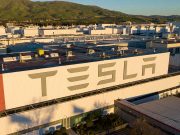
For corporate procurement officers, the implications are immediate and profound. Starting July 2026, companies bidding on U.S. Department of Defense contracts or EU Green Public Procurement tenders must demonstrate that at least 60% of their critical minerals originate from alliance-certified sources. By 2030, that threshold rises to 80%. Tesla, Ford, BMW, and Northvolt have already signed framework agreements to source alliance-compliant materials, with Tesla pledging that all Model Y vehicles sold in Europe and North America will use only alliance-tracked batteries by 2027.
Critically, the pact includes a digital mineral passport system, built on a permissioned blockchain developed by the World Economic Forum’s Mining and Metals Blockchain Initiative. Each ton of lithium or cobalt carries an immutable record of origin, carbon footprint, water usage, and labor conditions—visible to regulators and buyers alike. This transparency turns ethical sourcing from a marketing claim into a verifiable asset, enabling premium pricing in ESG-conscious markets.
The financial markets have responded decisively. Shares of Lithium Americas (NYSE: LAC) surged 9.2%, while European refiner Umicore (EPA: UMI) rose 6.7%. Conversely, Chinese battery giant CATL (SHE: 300750) fell 3.1% on concerns over reduced access to Western OEMs. Investment banks like Goldman Sachs and BNP Paribas have launched dedicated “alliance-compliant” commodity funds, signaling institutional confidence in the long-term decoupling trend.
Yet challenges persist. Scaling non-Chinese supply will take years: it takes an average of 12–15 years to bring a new mine online in the West due to permitting, litigation, and community opposition. The alliance addresses this through “permitting compacts,” where the U.S. and EU agree to align environmental review timelines and share technical expertise—cutting approval windows by up to 40%.
For emerging economies, the opportunity is historic. Namibia, which holds the world’s fourth-largest uranium reserves and vast lithium deposits, has already negotiated a bilateral addendum granting its miners automatic alliance certification if they partner with U.S. or EU processors. Similar talks are underway with Chile, Zambia, and Indonesia—though Jakarta’s recent nickel export restrictions complicate alignment.
In essence, the U.S.-EU Critical Minerals Alliance transcends traditional trade deals. It is an industrial covenant—one that recognizes that in an era of climate urgency and strategic competition, the control of raw materials is as vital as the control of data or territory. For businesses navigating this new landscape, compliance is no longer optional. It is the price of participation in the clean economy of tomorrow.
And as the first shipments of alliance-certified lithium begin moving from Quebec to Northvolt’s gigafactory in Sweden later this year, one truth becomes undeniable: the future of the industry will be built not just on innovation, but on integrity—and who you choose to source it with.
Follow us on Instagram.
https://www.instagram.com/businessnewsng?igsh=ZXpweTdjOGF1ZXdu