















Elon Musk’s artificial intelligence company, xAI, has officially launched Grokipedia, an AI-powered encyclopedia designed to rival Wikipedia in scope and reliability. Rolling out on Monday, the platform debuted with over 800,000 articles—entirely generated by AI—and marks a bold step in Musk’s broader mission to reshape how information is accessed and verified online. The Grokipedia launch by xAI positions the platform as a truth-focused alternative to traditional knowledge repositories, though early analysis reveals it still relies heavily on its predecessor: Wikipedia.
In an X post announcing the release, Musk stated that the core goal of Grokipedia—and its sibling AI model, Grok—is to deliver “the truth, the whole truth, and nothing but the truth.” He acknowledged the platform is not yet perfect but emphasized a commitment to continuous improvement. “We will never be perfect, but we shall nonetheless strive towards that goal,” he said.
Musk has long criticized Wikipedia for what he describes as systemic bias, particularly political slant in biographical entries and resistance to factual corrections. His criticism intensified in October 2025, when he responded to a post by White House AI advisor David Sacks, who claimed that “Wikipedia is hopelessly biased” due to editorial control by “an army of left-wing activists.” Musk amplified such critiques, labeling Wikipedia “wokepedia” and calling for a more neutral, AI-driven alternative.
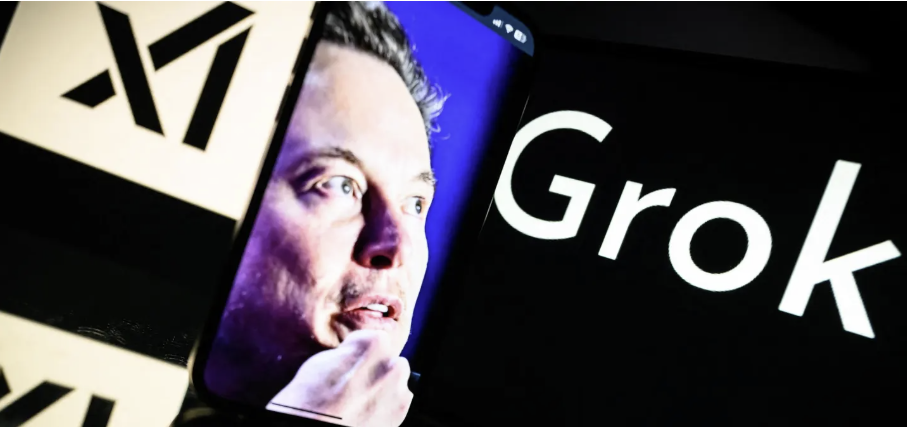
Grokipedia was developed under this premise: to create a scalable, real-time, and ideologically balanced knowledge base powered by artificial intelligence. Unlike Wikipedia, which depends on human volunteers to write and edit content, Grokipedia uses xAI’s large language models to generate articles automatically, with the promise of faster updates and reduced editorial influence.
However, initial reviews suggest the platform is still in its infancy. While the homepage mirrors Wikipedia’s clean design—with a central search bar and structured entries featuring headings, citations, and references—many articles include a prominent disclaimer: “The content is adapted from Wikipedia, licensed under Creative Commons Attribution-ShareAlike 4.0 License.”
Further scrutiny reveals that numerous Grokipedia entries are near-verbatim copies of their Wikipedia counterparts. A dedicated Wikipedia page on Grokipedia itself notes that “many articles are derived from Wikipedia articles, with some observed to be copied nearly verbatim”—raising questions about originality and intellectual independence.
Unlike Wikipedia, Grokipedia does not currently allow public editing. Instead, users are encouraged to interact with the system via Grok, xAI’s AI chatbot, to request additions, modifications, or deletions. According to Musk, Grok will either fulfill the request or explain why it cannot—adding a layer of algorithmic governance over content control.
Musk admitted that reliance on Wikipedia is a temporary limitation. In a follow-up post, he acknowledged the dependency and promised it would be resolved by December 2025. “Version 1.0 will be 10X better, but even at 0.1 it’s better than Wikipedia,” he claimed—a statement met with skepticism from digital rights advocates and open-knowledge communities.
The Grokipedia launch by xAI arrives amid intensifying competition in AI-driven search. Just last week, OpenAI unveiled a new web browser integrating ChatGPT, positioning its AI as a direct challenger to Google’s dominance in online search. This shift signals a broader industry transformation: users increasingly turn to AI assistants for answers rather than traditional search engines.
As AI reshapes information ecosystems, platforms like Grokipedia raise critical questions about transparency, sourcing, and editorial accountability. Can an AI truly remain neutral? And can a system trained on potentially biased data achieve the objectivity it claims to pursue?
For now, Grokipedia stands as both an experiment and a provocation—an AI-generated mirror of human knowledge, still reflecting its source material while aspiring to transcend it. Whether it evolves into a credible alternative or remains a derivative footnote in the history of digital encyclopedias will depend on its ability to break free from the very foundation it currently rests upon.
Follow us on Instagram.
https://www.instagram.com/businessnewsng?igsh=ZXpweTdjOGF1ZXdu