














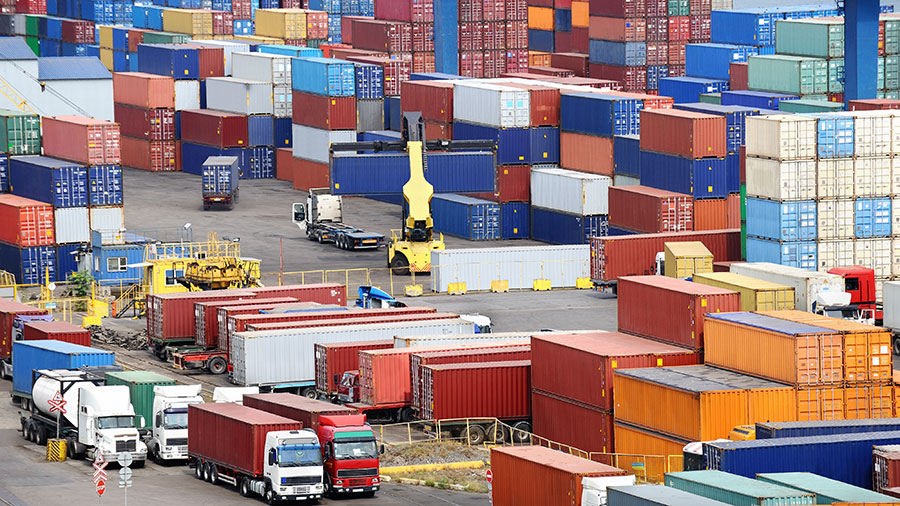
African imports from China surged 25% year-on-year to reach $122 billion in the first seven months of 2025, according to an analysis of China Customs data by Bloomberg, underscoring the deepening commercial ties between the continent and the Asian giant. Nigeria emerged as the top African importer, accounting for 11% of the total, followed by South Africa (10%), Egypt (9%), Liberia (8%), and Algeria (6%). The rise was driven by strong demand for construction machinery, passenger vehicles, steel, and solar panels—imports of which jumped 60% over the 12 months leading up to June 2025.
While Africa still represents just 6% of China’s global exports—about half the share of the United States—the trajectory is upward, with Bloomberg projecting that Chinese shipments to the continent could surpass $200 billion for the first time this year. This growth reflects both Africa’s expanding infrastructure needs and its increasing integration into global supply chains, often through Chinese-financed or constructed projects.
However, the surge in imports has intensified scrutiny over the structural imbalance in China Africa trade 2025, with critics highlighting a widening trade deficit. In 2024, Africa imported $178.76 billion worth of goods from China but exported only $116.79 billion in return, resulting in a deficit of $61.93 billion. Much of Africa’s exports consist of raw materials such as crude oil, minerals, and agricultural commodities, while Chinese exports are dominated by higher-value manufactured goods—from electronics to industrial equipment—locking the continent into a pattern of dependency on finished imports.
Peter Kagwanja, President and CEO of the Africa Policy Institute, argues that reversing this trend requires fundamental economic transformation. “As long as Africa remains a consumer of over-priced finished goods from China and a supplier of under-priced raw materials, this deficit will continue to widen,” he said. He stressed that African nations must accelerate industrialization and value addition to fully benefit from recent trade concessions offered by Beijing.
In a significant policy shift, Chinese President Xi Jinping announced in June 2025 that all African countries maintaining diplomatic relations with China would receive “zero-tariff treatment” on 100% of tariff lines. The move covers 53 African nations and aims to boost intra-African exports to China. eSwatini is excluded due to its recognition of Taiwan, which China considers a breakaway province.
Kagwanja welcomed the initiative but cautioned that Africa must do more than passively accept market access. “China’s zero-tariff policy is a major opportunity, but Africa must be ready to seize it—with processed goods, not just raw materials.”
Cavince Adhere, a Nairobi-based expert on China-Africa relations, emphasized that services trade remains a largely untapped frontier for balancing the relationship. “Trade in services is an area that has been neglected for far too long,” he said. “It offers Africa a chance to modernize its engagement with China in a way that benefits both sides.”
He pointed to Kenya’s tourism sector as a promising example. According to Kenyan and Chinese tourism authorities, around 50,000 Chinese visitors traveled to Kenya in 2024, with projections reaching 100,000 in 2025—a potential revenue stream that could contribute meaningfully to narrowing the trade gap.
Against a backdrop of shifting global trade dynamics, including former U.S. President Donald Trump’s increasingly protectionist policies toward Africa, Adhere argued that diversifying trade partnerships is essential for continental autonomy. “It’s not about giving China more influence,” he said. “It’s about giving Africa more choice—and ensuring our partners are responsive to our development goals.”
Kagwanja agreed, noting that U.S. trade uncertainties may ultimately push Africa to strengthen South-South cooperation. “The tariffs might come as a blessing in disguise,” he said, “forcing Africa to deepen regional trade and build stronger economic links with emerging powerhouses like China.”
As China Africa trade 2025 reaches new highs, the challenge for African policymakers is no longer just how to buy from China—but how to sell, partner, and produce alongside it. The path forward lies not in reducing engagement, but in transforming it: from extraction to exchange, from imbalance to mutual benefit.
Follow us on Instagram.
https://www.instagram.com/businessnewsng?igsh=ZXpweTdjOGF1ZXdu