
















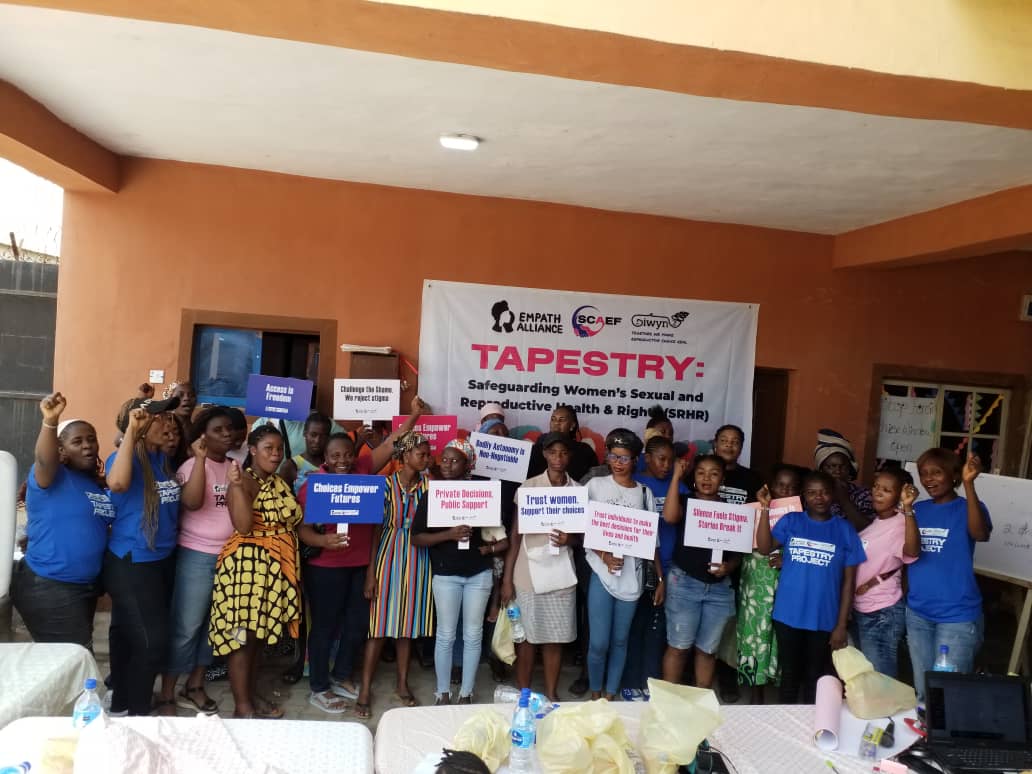
By Florence Amagiya
The SARACARE Empowerment Foundation (SCAEF) has called for urgent national dialogue and stronger policy attention on abortion, describing it as one of the most neglected issues in Nigeria’s mass media and broader conversations on Sexual and Reproductive Health and Rights (SRHR).
Speaking during its TAPESTRY advocacy training held on February 7, 2026, the Foundation highlighted the dangerous consequences of silence, stigma and misinformation surrounding abortion, warning that women’s health and lives remain at significant risk.
According to SCAEF, dominant cultural and media narratives often frame abortion in moralistic and judgmental terms. Phrases such as “only bad women have abortions,” “a pregnancy is more valuable than the woman carrying it,” and “women must suffer after abortion to remain morally acceptable” continue to shape public perception.
The Foundation noted that such narratives reinforce stigma, shame and discrimination, making it difficult for women to seek accurate information and safe medical care.
Social Isolation and Emotional Impact
SCAEF emphasized that women who experience abortion frequently face social isolation from religious institutions, workplaces, schools, families and their communities. Fear of condemnation discourages many from speaking openly or seeking support from partners and loved ones, forcing them into secrecy that heightens health risks.
At the individual level, abortion-related stigma can lead to deep feelings of guilt and shame. Many women internalize cultural expectations of motherhood and feel they have failed societal standards, which may negatively affect their mental health, self-esteem and overall wellbeing.
“Women have always found ways to end unwanted pregnancies,” the Foundation stated. “The real issue is not whether abortion happens, but whether it happens safely.”
Unsafe Abortion as a Public Health Concern
SCAEF drew attention to the alarming state of abortion safety in Nigeria, noting that most abortions are considered unsafe and often involve dangerous methods performed by untrained individuals.
Only about one in four abortions in the country is classified as safe, largely due to restrictive laws and limited access to trained providers. Research shows that restricting access does not reduce the incidence of abortion; rather, it increases the likelihood of complications and maternal deaths.
Citing 2020 data from Performance Monitoring and Accountability (PMA), the Foundation disclosed that Nigeria records an annual abortion rate of 41.8 per 1,000 women aged 15–49, translating to approximately 1.8 million abortions each year.
More than six out of ten abortions were categorized as least safe, while about 11 percent of women experienced complications severe enough to require post-abortion care at health facilities. Poor and rural women are particularly vulnerable, as they are more likely to seek services from unskilled providers, increasing their risk of serious complications or death.
Why Access Matters
The Foundation stressed that access to safe abortion services is critical to safeguarding women’s health and autonomy. Safe services, it noted, enable women to make informed decisions about their bodies, plan their futures, space births and prevent unwanted pregnancies.
To be effective, such services must be affordable, readily available, free from coercion and discrimination, youth-friendly, non-judgmental and not influenced by cultural or religious bias.
Legal and Policy Considerations
SCAEF also urged stakeholders to critically examine Nigeria’s legal framework on abortion and how restrictive laws shape women’s experiences and access to care. The Foundation emphasized the importance of healthcare providers understanding the law to ensure accurate information and appropriate referrals within existing legal boundaries.
Quoting the World Health Organization’s 2012 guidance, the Foundation reiterated: “The legal status of abortion has no effect on a woman’s need for an abortion, but it dramatically affects her access to safe abortion.”
It further referenced public health research indicating that abortion has occurred throughout history regardless of legal, religious or social restrictions.
Breaking the Silence
The organization concluded by stressing the need for open, evidence-based dialogue.
“Women need and deserve accurate information about their reproductive health and rights. Access to health information is a human right, and abortion services are a necessary part of healthcare,” the Foundation stated.
According to SCAEF, reducing stigma and misinformation through education and community engagement remains essential to preventing avoidable deaths from unsafe abortion.
“Silence perpetuates harm,” the Foundation warned. “Education saves lives.”
Follow us on Instagram.
https://www.instagram.com/businessnewsng?igsh=ZXpweTdjOGF1ZXdu