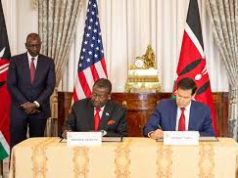

















The signing of the Japan-Philippines Reciprocal Access Agreement (RAA), in Tokyo marks far more than a diplomatic handshake—it’s a strategic realignment that will reshape defense procurement, maritime logistics, and industrial collaboration across the Indo-Pacific. As the first such pact Japan has ever signed with a Southeast Asian nation, the RAA allows mutual deployment of military personnel for joint exercises, humanitarian missions, and disaster response, effectively integrating two critical U.S. allies into a coordinated regional security architecture. For global defense contractors, shipbuilders, and logistics firms, this agreement unlocks new markets, accelerates co-development opportunities, and signals a deepening demand for interoperable, non-Western defense technology.
Under the terms of the RAA, Japanese Self-Defense Forces (JSDF) can now conduct training and relief operations on Philippine soil—including at Subic Bay and Cagayan de Oro—while Philippine Armed Forces gain access to Japanese bases like Sasebo and Iwakuni. Crucially, the agreement includes streamlined customs and tax procedures for equipment transfers, reducing deployment timelines from weeks to days. This operational fluidity is designed to counter growing gray-zone coercion in the South China Sea, where Chinese coast guard vessels have increasingly blocked Philippine resupply missions to disputed outposts like Second Thomas Shoal.
But beyond geopolitics, the deal carries significant commercial weight. Japan’s defense budget—now exceeding $60 billion annually—is prioritizing export-oriented platforms like the Mitsubishi F-X stealth fighter, Kawasaki P-1 maritime patrol aircraft, and submarine-launched anti-ship missiles. The Philippines, seeking to modernize its aging fleet amid rising tensions, has already expressed interest in acquiring Japanese radar systems, coastal surveillance drones, and amphibious transport vehicles. Mitsubishi Heavy Industries and IHI Corporation are expected to open liaison offices in Manila by Q3 2026.
For the global defense industry, the RAA creates a new corridor for trilateral cooperation. U.S. firms like Lockheed Martin and Raytheon are exploring hybrid solutions that integrate American sensors with Japanese platforms and Philippine operational data—a model already tested in missile warning systems. Meanwhile, European defense giants such as Thales and Saab see openings in electronic warfare and cyber-defense training, sectors not dominated by U.S. or Chinese vendors.
The pact also impacts civilian supply chains. Enhanced maritime domain awareness means greater demand for satellite-based vessel tracking, AI-powered anomaly detection, and secure undersea fiber optics—all areas where Japanese tech firms like NEC and Fujitsu hold competitive advantages. Philippine ports, in turn, are upgrading cold-chain and heavy-lift infrastructure to support rapid force projection, creating opportunities for logistics providers like Mitsui O.S.K. Lines and local conglomerates like San Miguel Corporation.
China’s Foreign Ministry condemned the agreement as “Cold War thinking,” but regional markets tell a different story. The Philippine peso strengthened 0.8% against the dollar on January 18, while Japanese defense stocks rose an average of 3.4%. Analysts at Jefferies noted that “alliance-enabled defense spending” in Southeast Asia could grow by 12% annually through 2030.
Critically, both nations emphasize the RAA’s non-aggressive character. “This is about resilience, not confrontation,” said Philippine Defense Secretary Gilberto Teodoro. Yet in an era where security underpins economic stability, the line between defense and commerce is blurring. For investors, the Japan-Philippines Reciprocal Access Agreement represents a bet on rules-based order—and the industries that sustain it.
As supply chains diversify away from single points of failure, partnerships like this offer not just deterrence, but durability. And in the Indo-Pacific, durability is the ultimate currency.
Follow us on Instagram.
https://www.instagram.com/businessnewsng?igsh=ZXpweTdjOGF1ZXdu