















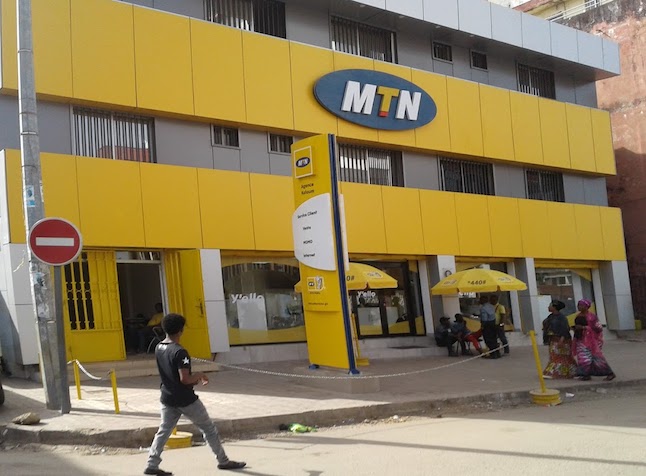
In a landmark move that signals a major shift in West Africa’s telecommunications sector, the Guinean government has taken full 100% ownership of Areeba Guinée, the country’s second-largest mobile operator—formerly known as MTN Guinea. This follows the complete withdrawal of MTN Group, the South African telecom giant, which officially exited the Guinean market in late November 2025 after nearly two decades of operations. The transition marks one of the most significant instances of state-led nationalization in Africa’s telecom history and underscores growing governmental interest in controlling strategic digital infrastructure. This Guinea 100% state ownership Areeba MTN exit decision positions the state as both regulator and operator—a dual role with far-reaching implications for competition, investment, and connectivity.
The sale was confirmed by the Ministry of Digital Economy and Private Sector Development in Conakry, which stated that all shares previously held by MTN Group have been transferred to the Republic of Guinea through its newly established public entity, the National Agency for Digital Infrastructure (ANID). Financial terms were not disclosed, but sources familiar with the transaction say the deal was structured as a phased buyout linked to regulatory compliance and spectrum obligations rather than an outright acquisition.
MTN’s departure comes amid increasing regulatory pressure and operational challenges in Guinea, including foreign exchange restrictions, tax disputes, and delays in license renewals. In its 2024 annual report, MTN Group cited “a difficult operating environment” and “uncertainty over policy direction” as key reasons for its strategic withdrawal from several African markets, with Guinea among the first to be fully divested.
“We remain committed to our pan-African vision,” said MTN Group CEO Ralph Mupita in a statement released earlier this year. “But we must operate where there is clarity, fairness, and sustainability.”
With over 6 million subscribers, Areeba Guinée controls approximately 30% of Guinea’s mobile market, trailing behind Orange Guinée but serving critical urban and rural corridors. Under state control, the government says it will invest in network modernization, expand 4G coverage, and roll out affordable data bundles aimed at boosting digital inclusion.
“This is about sovereignty,” said Dr. Cheick Mohamed Condé, Minister of Digital Economy. “Telecoms are no longer just a service—they are essential infrastructure, like roads and electricity. We must ensure they serve national development goals.”
However, analysts warn of potential risks. By becoming both owner and regulator, the state could blur oversight lines, discourage private investment, and reduce competitive incentives. Neighboring countries like Senegal and Côte d’Ivoire have maintained open, multi-operator markets with strong independent regulators—a model praised for driving innovation and affordability.
Additionally, questions remain about technical capacity, transparency, and funding. While the government plans to partner with international vendors for upgrades, past state-run enterprises in Guinea have struggled with inefficiency and underinvestment.
Still, the Guinea 100% state ownership Areeba MTN exit moment reflects a broader trend across Africa: rising interest in digital sovereignty. From Nigeria’s push for local data centers to Ethiopia’s partial re-nationalization of Ethio Telecom, governments are reasserting control over communication networks amid growing recognition of their economic and security value.
Whether this new chapter leads to improved service or political interference will depend on governance, accountability, and openness to collaboration.
Because when the state owns the network,
the real test isn’t coverage.
It’s credibility
Follow us on Instagram.
https://www.instagram.com/businessnewsng?igsh=ZXpweTdjOGF1ZXdu