













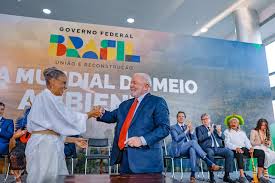
The recent launch of the Brazil Amazon Sovereignty Task Force, marks more than an environmental enforcement campaign—it’s a strategic recalibration of Brazil’s global economic positioning that will directly impact ESG portfolios, mining supply chains, and green manufacturing across North America, Europe, and Asia. President Luiz Inácio Lula da Silva’s deployment of 5,000 military personnel, satellite surveillance drones, and financial intelligence units to combat illegal mining and deforestation signals a decisive shift: Brazil is no longer tolerating environmental crime as a cost of doing business. For investors, this move transforms the Amazon from a reputational liability into a potential asset—if enforcement holds.
The task force, activated under Presidential Decree No. 12,844, targets illegal gold, coltan, and cassiterite operations in Indigenous territories across Pará, Amazonas, and Roraima—regions that have seen a 22% surge in deforestation since Q3 2025, according to Brazil’s National Institute for Space Research (INPE). But unlike past initiatives, this operation integrates real-time geospatial monitoring, blockchain-based mineral tracing, and cross-border financial tracking. Companies or individuals linked to environmental crimes now face not only equipment seizure and arrest but also the freezing of foreign bank accounts through cooperation with Interpol and the Financial Action Task Force (FATF).
For global supply chains, the implications are profound. An estimated 15–20% of the world’s artisanal gold—and up to 30% of conflict-linked tin—passes through informal networks in the Brazilian Amazon before entering global markets. Electronics manufacturers, jewelry brands, and battery producers relying on unverified suppliers now face heightened due diligence risks. The U.S. Conflict Minerals Rule and EU’s upcoming Corporate Sustainability Due Diligence Directive (CSDDD) could trigger compliance failures if traceability gaps persist.
Already, major multinationals are responding. Apple and Samsung have mandated third-party audits for all South American mineral suppliers by Q2 2026. Meanwhile, London Metal Exchange (LME) members are accelerating adoption of the Responsible Sourcing Standard, which now includes Amazon-specific risk flags.
Critically, the task force is backed by renewed international financing. On the same day of its launch, Norway and Germany pledged $300 million to reactivate the Amazon Fund—the largest inflow since 2018—contingent on verified reductions in deforestation. This capital will support sustainable agroforestry, Indigenous-led conservation, and clean energy microgrids, creating new opportunities for impact investors. BlackRock’s Sustainable Emerging Markets Fund has already signaled interest in Amazon-linked green bonds.
For Brazil’s domestic economy, the move strengthens Lula’s “green industrialization” agenda. By cleaning up the extractive sector, Brazil aims to position itself as a reliable supplier of responsibly sourced critical minerals for the energy transition—especially nickel, copper, and lithium, where demand is projected to triple by 2035. Vale S.A., the state-controlled mining giant, welcomed the crackdown, stating it “levels the playing field against illegal operators undercutting ethical producers.”
Yet challenges remain. Illegal miners—many backed by transnational syndicates with ties to Venezuela and Colombia—have shown willingness to use violence. Over 120 environmental defenders were killed in the Amazon in 2025 alone. The task force includes specialized protection units for Indigenous leaders, but security risks persist.
From a market perspective, the Brazil Amazon Sovereignty Task Force redefines sovereign risk. Countries once seen as passive stewards of biodiversity are now active enforcers of ecological integrity—a stance that aligns with rising investor demand for verifiable climate action. Fitch Ratings noted in a January 18 report that sustained enforcement could lead to a one-notch upgrade in Brazil’s ESG sovereign score by mid-2026.
In the end, Lula’s gamble is clear: protect the Amazon not just for ecology, but for economics. And in a world where sustainability is increasingly priced into capital, sovereignty over nature may be the ultimate competitive advantage.
Follow us on Instagram.
https://www.instagram.com/businessnewsng?igsh=ZXpweTdjOGF1ZXdu