















The United States and African nations are deepening their cooperation in renewable energy, driven by shared goals of expanding clean power access, unlocking economic growth, and securing critical mineral supply chains. This evolving U.S.-Africa renewable energy collaboration reflects a strategic alignment between American technological expertise and capital, and Africa’s vast solar, wind, and mineral resources. With over 600 million Africans still lacking reliable electricity, the stakes are high—not just for development, but for global climate resilience and geopolitical influence.
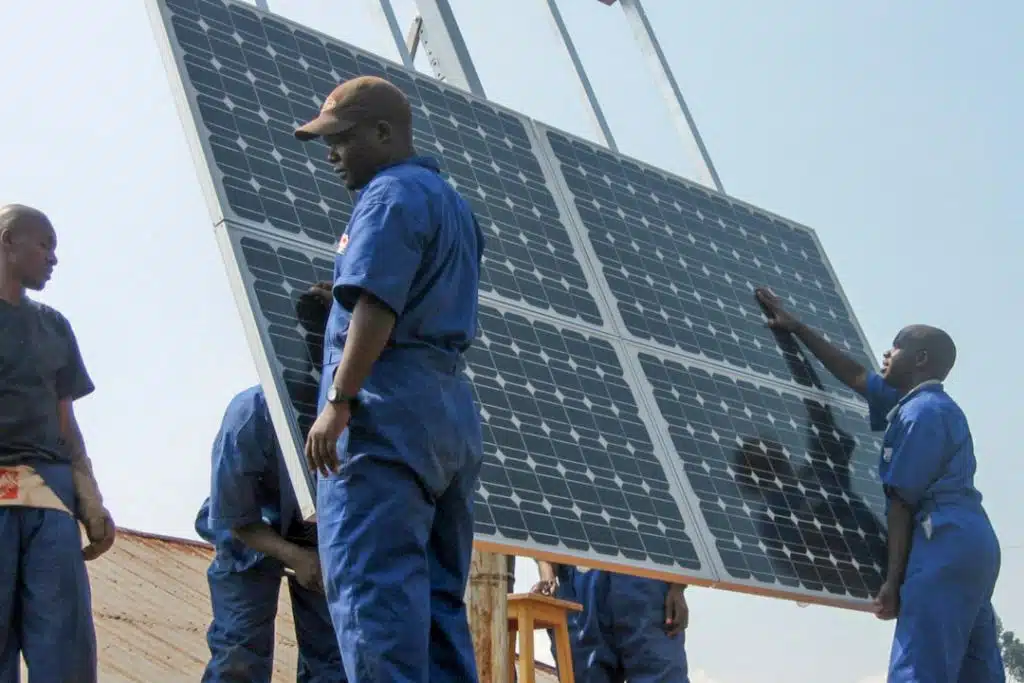
At the heart of this partnership is Power Africa, a flagship initiative launched in 2013 that has mobilized more than $80 billion in public and private commitments, adding 14.3 gigawatts of new electricity capacity across the continent. Backed by $7 billion in U.S. government funding, the program has achieved an impressive 11-to-1 leverage ratio and engaged over 100 American companies in projects ranging from solar microgrids to gas-to-power infrastructure. Its success demonstrates how coordinated policy and financing can catalyze tangible outcomes: powering schools, clinics, and small businesses while creating jobs and strengthening regional energy systems.
Beyond Power Africa, new frameworks like the African Green Industrialization Initiative aim to position the continent as a leader in the global energy transition by scaling green manufacturing and renewable deployment. U.S. firms are contributing advanced technologies in modular energy systems, microgrid management, and green hydrogen—capabilities that support decentralized, resilient power networks suited to Africa’s diverse geographies.
African governments, in turn, are reforming regulatory environments to attract investment. Nigeria’s Petroleum Industry Act, for example, has modernized licensing and created fiscal incentives for midstream gas and renewable projects. Sovereign wealth funds and special-purpose vehicles are being established to de-risk investments and improve foreign exchange stability—key concerns for international financiers.
Yet despite these advances, significant challenges persist. One of the most pressing is the persistent financing gap in Africa’s clean energy sector. As Western institutions withdraw support for fossil fuels, few private investors have stepped in to fund early-stage renewables at scale. This vacuum has allowed countries like China and Saudi Arabia to expand their footprint through direct investment and project financing—often with fewer transparency requirements or environmental safeguards.
Regulatory fragmentation further complicates cross-border progress. Differing standards for grid interconnection, permitting timelines, and tax regimes across African markets make it difficult for U.S. companies to deploy standardized solutions at scale. A solar developer operating in Kenya may face entirely different compliance rules in Ghana or Senegal—increasing costs and slowing deployment.
Political dynamics also shape the landscape. Many African leaders are increasingly skeptical of aid models tied to conditionalities from traditional donors. Instead, they are demanding investment-based partnerships that respect national sovereignty, prioritize local job creation, and foster technology transfer. They want equity, not charity.
This shift was evident when U.S. representatives blocked a $500 million clean energy disbursement to South Africa in early 2025 over governance concerns—a decision that temporarily stalled momentum and opened the door for the European Union to step in with €5 billion in alternative funding. Such episodes underscore the fragility of trust and the need for consistent, long-term engagement.
Still, opportunities abound. Africa holds nearly 30% of the world’s known reserves of cobalt, lithium, and rare earth elements—critical inputs for batteries, electric vehicles, and wind turbines. By aligning policies around sustainable mining, joint ventures, and transparent trade, the U.S. and Africa can co-develop supply chains that reduce dependence on dominant players like China while ensuring ethical extraction practices.
Technology sharing remains another underexploited frontier. U.S. companies possess deep expertise in smart grids, energy storage, and digital monitoring systems—tools that could accelerate Africa’s leapfrog into modern energy infrastructure. But effective transfer requires more than equipment exports; it demands training, local capacity building, and IP frameworks that protect innovation while enabling adaptation.
Platforms like the Africa Climate Summit and African Energy Week are emerging as vital convening spaces where policymakers, investors, and innovators can align priorities and announce deals. Record participation from global renewable firms signals growing confidence in the continent’s potential.
Ultimately, the future of U.S.-Africa renewable energy collaboration hinges on moving beyond transactional relationships toward durable, equitable partnerships. When policies are aligned, financing is predictable, and mutual benefits are clear, the results speak for themselves: more lights turned on, more businesses powered up, and stronger supply chains built on transparency and shared value.
For the U.S., sustained engagement is not just about climate leadership—it’s about maintaining strategic relevance in a region where global competition is intensifying. For Africa, it’s about transforming abundant natural assets into inclusive prosperity. Together, they have the tools to succeed. What’s needed now is the will to follow through.
Follow us on Instagram.
https://www.instagram.com/businessnewsng?igsh=ZXpweTdjOGF1ZXdu