
















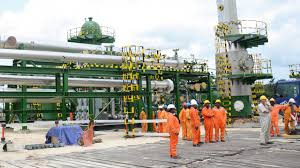
Nigeria has recently reclaimed its position as Africa’s top destination for upstream oil and gas investment, buoyed by a successful 2025 marginal field licensing round that attracted over $1.3 billion in commitments from local and international players. However, despite this renewed investor interest, the country faces a growing challenge: translating new license awards into actual production increases. This persistent disconnect underscores what analysts are calling the Nigeria oil upstream investment production gap—a structural hurdle that threatens to undermine the nation’s ambitions of boosting crude output to 2.5 million barrels per day (bpd) by 2027.
According to data from the Nigerian Upstream Petroleum Regulatory Commission (NUPRC), the 2025 licensing round awarded 57 marginal fields to 46 companies, including indigenous operators like Seplat Energy, Petrolin, and newcomer deep-tech exploration firms leveraging AI-driven seismic analysis. The move was hailed as a major step toward unlocking stranded assets and decentralizing control from the traditional oil majors.
Yet, historical trends raise concerns. Since 2019, Nigeria has awarded over 150 marginal fields, but fewer than 30% have moved beyond feasibility studies or initial development planning. Many licensees struggle with financing, security risks, pipeline vandalism, gas flaring regulations, and delays in obtaining permits—slowing or stalling project timelines.
“Winning a license is just the beginning,” said an energy analyst at SBM Offshore Nigeria. “The real test comes in securing capital, managing community relations, navigating regulatory processes, and connecting to infrastructure. That’s where many fall short.”
This Nigeria oil upstream investment production gap is not just about bureaucracy—it’s about ecosystem readiness. Most marginal fields are small, located onshore or in shallow waters, and require cost-effective, modular solutions to be viable. But access to specialized equipment, skilled labor, and midstream facilities like flow stations and export terminals remains limited.
Additionally, investors face uncertainty around fiscal terms and policy consistency. While the Petroleum Industry Act (PIA) of 2021 created a more transparent framework, implementation has been uneven. Tax disputes, delayed approvals for decommissioning and asset transfers, and fluctuating local content rules have dampened momentum.
Security remains another critical constraint. In the Niger Delta, pipeline vandalism and illegal refining continue to disrupt operations. In offshore areas, piracy and maritime insecurity deter long-term investment. According to the International Maritime Bureau, West Africa accounted for over 50% of global piracy incidents in 2024—with Nigeria at the epicenter.
Despite these challenges, there are signs of progress. Seplat recently brought the Aje field Phase 2 online, adding 15,000 bpd, while Saipem and NPDC began development of the OML 130 block. The NUPRC has also streamlined approval processes and introduced digital platforms for faster permitting.
“The potential is enormous,” said Mele Kyari, Group CEO of NNPC Limited, during a recent industry forum. “But we must ensure that every license translates into measurable production. That requires collaboration, speed, and accountability.”
To close the Nigeria oil upstream investment production gap, stakeholders say the government must do more:
- Fast-track host community agreements
- Expand gas evacuation infrastructure
- Provide targeted financing mechanisms for indigenous operators
- Strengthen enforcement of environmental and safety standards
With crude prices stabilizing and global demand expected to remain strong through 2030, Nigeria has a narrow window to capitalize on its licensing success.
Because attracting investment is one thing.
Turning it into flowing oil?
That’s the real measure of progress.
Follow us on Instagram.
https://www.instagram.com/businessnewsng?igsh=ZXpweTdjOGF1ZXdu