














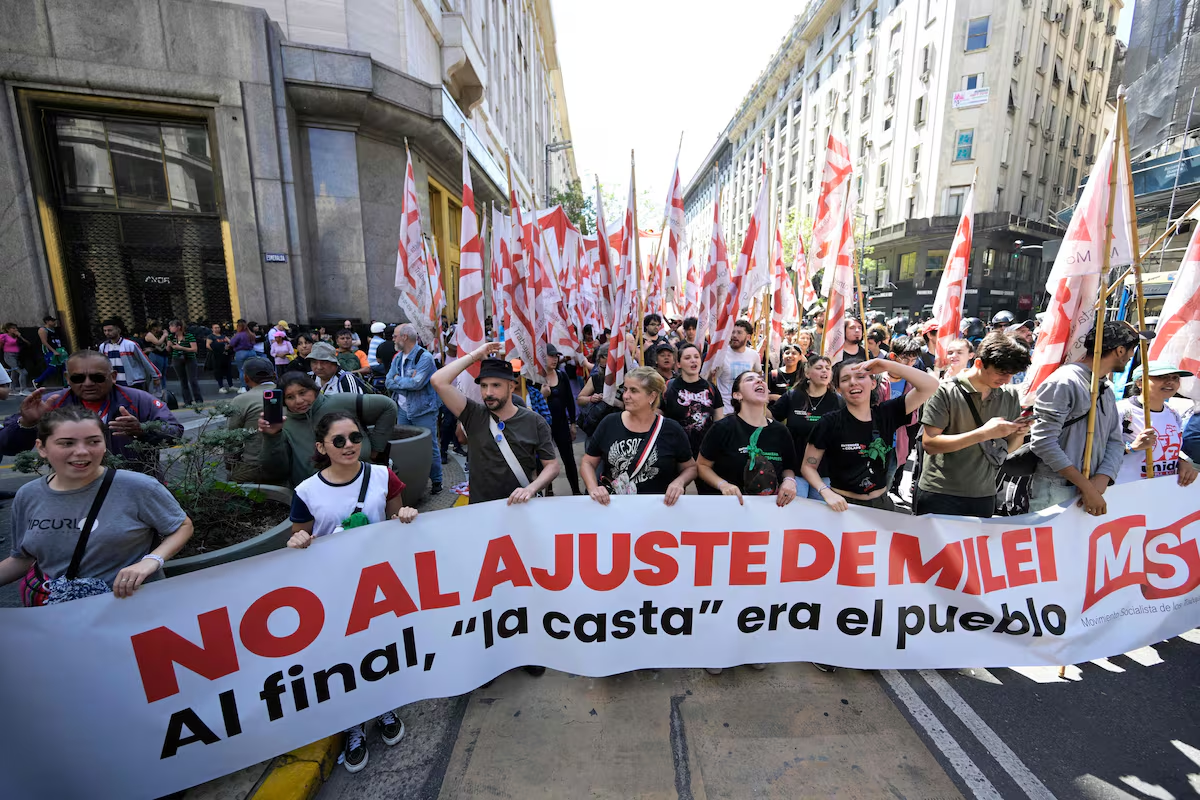
In a powerful display of civic resistance, an estimated 520,000 people marched peacefully through the streets of Buenos Aires , in what authorities and independent observers confirm is the largest public demonstration in Argentina since the economic and political crisis of December 2001. The protest targeted President Javier Milei’s proposed austerity measures—specifically, plans to privatize national water utilities and slash public university funding by 60%—policies critics say threaten fundamental social rights and deepen inequality.
Organized by the General Confederation of Labour (CGT), Argentina’s largest labor union, alongside the Argentine University Federation (FUA) and grassroots coalitions, the march stretched from Plaza de Mayo to the National Congress building. Participants included teachers, healthcare workers, students, retirees, and informal sector workers, many carrying signs reading “El agua es vida, no negocio” (“Water is life, not business”) and “La universidad pública es un derecho” (“Public university is a right”).
The demonstration remained entirely peaceful, with the National Gendarmerie—Argentina’s federal security force—reporting no incidents of violence, vandalism, or arrests. Crowd estimates were verified using aerial surveillance and entry-point counters, consistent with protocols used in prior mass mobilizations.
The protests respond directly to the government’s upcoming “Public Services Modernization Bill,” which President Milei’s administration confirmed will be formally submitted to Congress on January 20, 2026. The bill seeks to transfer management of water and sanitation services from state-owned AySA to private consortia, arguing that privatization will improve efficiency and attract foreign investment. Simultaneously, the Ministry of Economy has proposed cutting the national higher education budget from 1.8% to 0.7% of GDP, redirecting funds toward debt servicing and central bank reserves.
In a press briefing following the march, CGT Secretary-General Héctor Daer warned: “When you commodify water and dismantle education, you don’t modernize—you marginalize.” Student leaders emphasized that tuition-free public universities have long served as engines of social mobility in Argentina, particularly for low-income and rural youth.
The International Monetary Fund (IMF), which is currently reviewing Argentina’s updated fiscal consolidation plan, issued a neutral statement acknowledging receipt of the proposal but clarified it “does not take position on sovereign legislative processes.” However, internal IMF documents reviewed by Reuters indicate concern over potential social unrest impacting macroeconomic stability.
President Milei, who took office in December 2023 on a libertarian platform promising radical deregulation, has defended the reforms as necessary to stabilize the peso, curb inflation (which remains above 40% annually), and meet conditions for a $44 billion standby agreement with the IMF. Yet even some pro-market economists have questioned the timing and scope of the cuts, noting that water privatization attempts in the 1990s led to price spikes and service inequities—contributing to the very unrest that defined the early 2000s.
Tuesday’s protest signals growing pushback against the notion that austerity must precede equity. As dusk fell over Avenida 9 de Julio, demonstrators lit candles in silence—a symbolic echo of the cacerolazos (pot-banging protests) that once toppled governments. This time, the message was clear: reform yes, but not at the cost of dignity.
With the bill heading to Congress next week, all eyes are on whether Argentina’s legislature—where Milei’s coalition lacks a majority—will heed the voices in the street or accelerate a path that many fear could reignite national turmoil.
Follow us on Instagram.
https://www.instagram.com/businessnewsng?igsh=ZXpweTdjOGF1ZXdu