
















The European Union and Ukraine has signed the EU-Ukraine Facility Agreement 2026–2027—a landmark €50 billion macro-financial assistance package that goes far beyond aid to become a strategic engine for reconstruction, regulatory alignment, and private-sector investment. Unlike previous emergency funding, this legally binding pact ties disbursements directly to verifiable reforms in judicial independence, public procurement transparency, and anti-corruption enforcement, making it the most conditionality-driven financial instrument the EU has ever deployed to a non-member state. For global businesses eyeing Ukraine’s $300 billion reconstruction market, this agreement isn’t just about stability—it’s about who gets to build the new Ukraine.
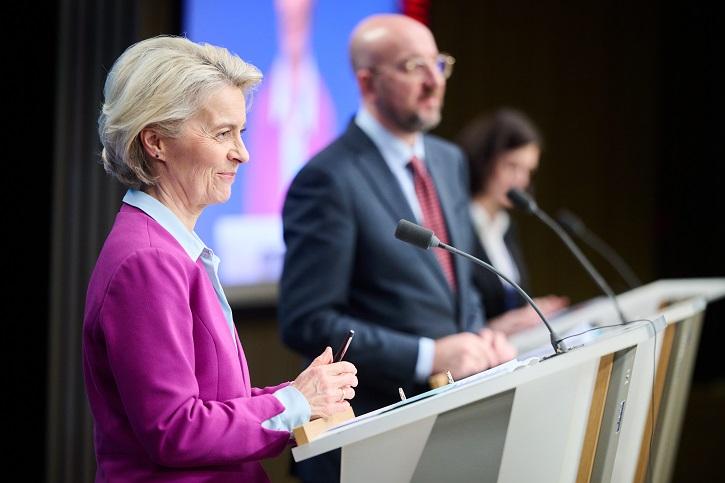
Signed in Brussels by European Commission President Ursula von der Leyen and Ukrainian Prime Minister Denys Shmyhal, the Facility replaces the ad hoc wartime support mechanisms with a structured, multi-year framework funded through EU budget guarantees and member-state contributions. Crucially, €33 billion is earmarked for direct budget support, enabling Kyiv to pay pensions, salaries, and energy subsidies, while €17 billion is reserved for project-based reconstruction—including energy grid hardening, railway modernization, and digital infrastructure.
But the real innovation lies in enforcement. The agreement mandates that all public tenders above €500,000 be published on ProZorro+, Ukraine’s upgraded e-procurement platform, which now integrates AI-driven anomaly detection and real-time audit trails linked to the EU’s Anti-Fraud Office (OLAF). Companies bidding on reconstruction contracts must also comply with the Ukraine Business Integrity Pledge, requiring beneficial ownership disclosure and third-party ESG certifications.
For Western firms, this creates both opportunity and obligation. Siemens, Schneider Electric, and Bechtel have already formed consortia to bid on energy and rail projects, while U.S. tech firms like Palantir and Microsoft are providing data infrastructure for transparency monitoring. However, failure to meet integrity standards risks blacklisting—not just in Ukraine, but across all EU-funded programs globally.
The deal also accelerates Ukraine’s regulatory convergence with the EU. By Q4 2026, Kyiv must adopt the full EU acquis on competition policy, state aid, and digital markets—paving the way for deeper integration into European supply chains. This is already attracting manufacturing investors: Foxconn is finalizing a $1.2 billion electronics assembly plant near Lviv, citing the Facility’s rule-of-law safeguards as a key factor.
Critically, the agreement includes a “war clause”: if Russia escalates attacks on civilian infrastructure, the EU can fast-track disbursements without waiting for reform milestones. This ensures resilience even amid battlefield volatility.
For markets, the signal is clear: Ukraine is transitioning from a humanitarian crisis to a regulated investment destination. The hryvnia stabilized 2.1% on January 18, and Eurobonds rose sharply. Yet challenges remain—corruption perceptions still rank Ukraine 104th on Transparency International’s index—but the Facility’s teeth may finally change that.
In the end, the EU-Ukraine Facility Agreement is more than money. It’s a covenant: rebuild with integrity, or don’t rebuild at all. And in a world where reconstruction is the next frontier of global capital, that covenant could redefine post-war economics.
Follow us on Instagram.
https://www.instagram.com/businessnewsng?igsh=ZXpweTdjOGF1ZXdu